+880-1720243885
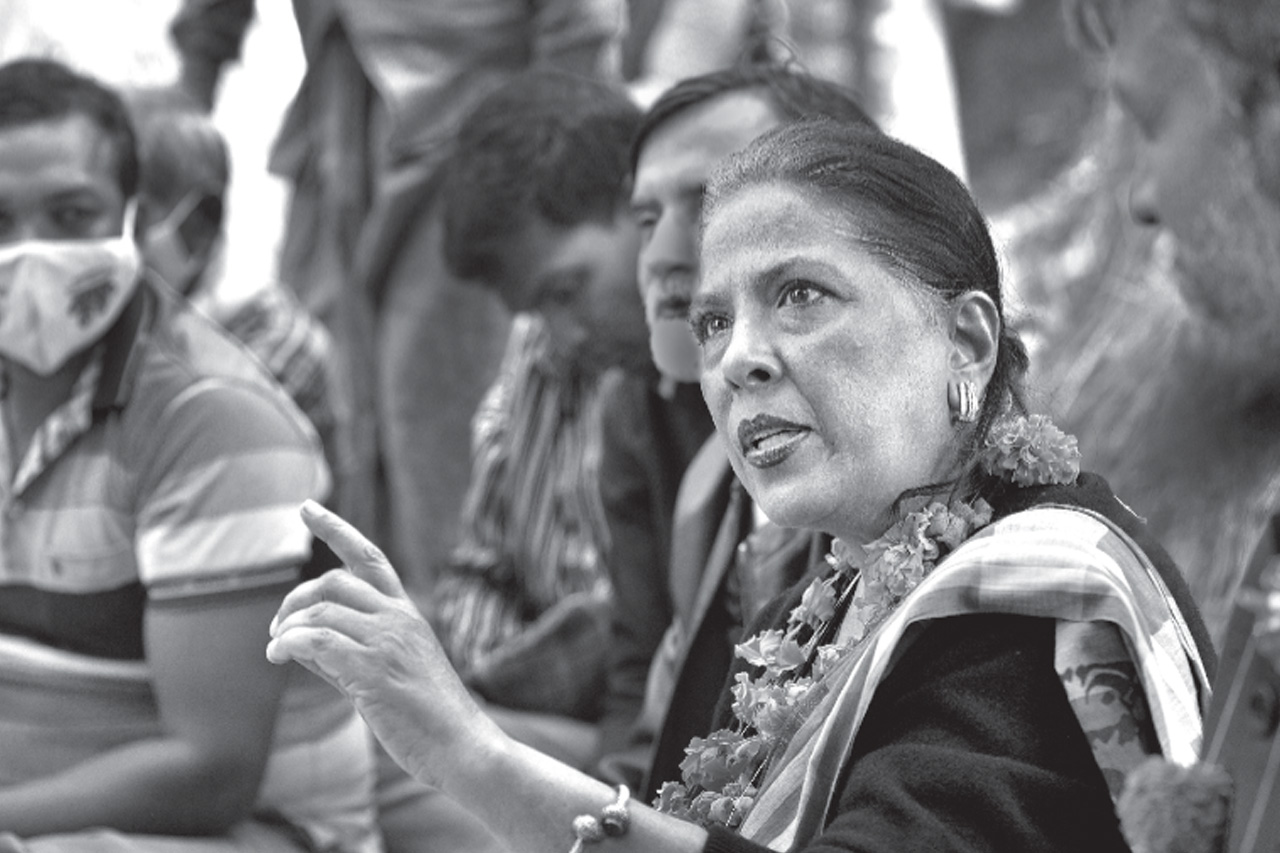
1. Founder Head of Brotee Group (Brotee Samaj Kallyan Sangstha (NGO), IT Matabbor.com, Brotee Drinking Water Systems Ltd., Green Brotee and mother company Brotee a company for social change) - since 1993 to date
2. Chairperson, Plasma Plus Application and Research laboratory (the first ISO certified lab of the country in the private sector)
3. Former Member, National River Conservation Commission
4. Founder Member, GBM (Gangal B'putra Meghna) CSO Network for Regional Cooperation in Water Management (since 2017)
5. National Committee Member and partner, IUCN
Major Areas of Work
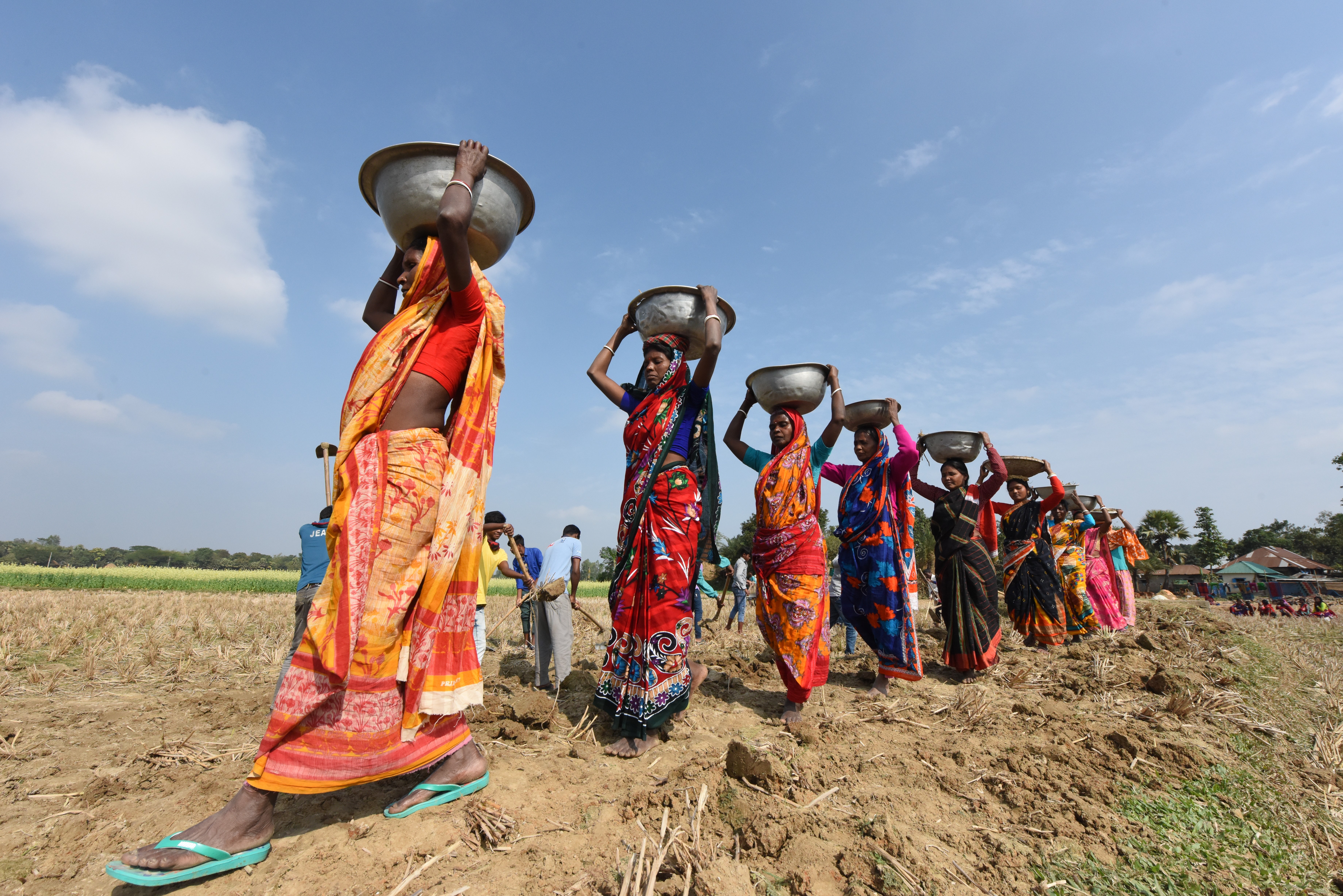
1. Human Rights - protection of the vulnerable Adivasi, extreme poor women and children; community governance and electoral governance in particular (a major election watchdog)for the past 16 years (from 2001); Youth movement in 200 villages in Northern Bangladesh building SDG villages: child marriage and addiction free, 100% literacy and sanitation with zero school dropout villages (12 years); 3000 social volunteers are active.
2. Right to safe water, as a basic right of the people and a constitutional obligation of the state: action research in the search for alternative safe drinking water where there is arsenic and salinity: a) The Sharmeen Murshid surface water model is an innovation of the first non chemical river water treatment system of the country that successfully provides pure drinking water to arsenic affected villages since 2009; b)It is about to launch its second pilot (2018) in the coastal belt, innovating desalination model for safe drinking water for the community; c) Pond preservation movement, a community management model to protect water bodies in the coast; These are ready to be replicated nationwide.
3. Protecting Vulnerable Children of Aila Distance adoption (so far 300 children), rehabilitation of mothers and care givers in a 5 year cycle, empowering them to earn and take over responsibility of the child themselves. Each child is supported till s/he finishes grade 5 and mothers are skilled in earning income; in Gabura, this is a youth movement that protects the environment, children, campaigns and raises awareness to protect the Sundarban, the Poshur River and plants Sundori trees; 84 Green and Social Activists are born; this force is now being trained to protect rivers in their communities. (since 2005)
4. As the founder and MD of the social business wings of Brotee, rural IT capacity and community IT centers have been opened. More than 1500 marginal youths have so far been trained in basic computer education and IT services are provided to the community through 3 centers; Green Brotee is a tree planting wing of Brotee;
5. Brotee, the NGO began MFI progam since 2015 and is gradually building its economic powers to sustain itself.
6. The NGO provides community legal services to the vulnerable, especially women who continue to be victims of domestic violence and social exploitation; it is now developing e-centers for legal counseling to increase reach and minimize cost.
All these programs are designed by Sharmeen Murshid, the founder Head who manages, monitors and ensures the QC of its implementation.
Summary Resume
Profession – Sociologist, Electoral Analyst, social architect /development practitioner and Facilitator
Schooling - Graduation (BA) and Post graduation (MA) in Sociology was completed from the University of Warsaw in 1982
Career /Key qualifications
With rich background in Sociology, Sharmeen Murshid has more than 25 years of work experience and more than 20 years of institution building in participatory development in Bangladesh. She founded Brotee, a private company for participatory capacity building and Brotee samaj kallyan sangstha, a rights based NGO committed to building an inclusive participative grassroots society.
She has been working with electoral governance, human rights and democracy for the last 10 years and today she is recognized by the media, civil society and political activists as an election analyst and an independent election monitor of high repute. She is nationally well known for her commitment to democracy, voting rights of the people and successful election monitoring activities that has led Brotee to become a major election watchdog organisation in the country.
She has campaigned and researched for the past 10 years, for people’s right to safe water. She is committed to finding safe drinking water options and eco balanced water management. Her efforts led her to successfully pilot and complete the first non chemical river water treatment plant in Bangladesh, providing access to safe drinking water to 1000 families in 3 arsenic affected villages. She has led national and international media and legal campaigns seeking justice for the arsenic affected people of Bangladesh. She even submitted a memorandum to PM Tony Blair and spoke in the House of Lords seeking accountability of the multinationals.
For the past 4 years, she has also been working for the rehabilitation of children and women in cyclone affected area and protecting human rights of those affected by climate change; working with people centred approaches for the past 10 years, she has also pioneered the concept of Brotee’s participatory methodological framework for social change, the Gonokriya Gobeshona or people’s action research to address poverty and human rights concerns of the poor and vulnerable in rural Bangladesh; she is presently leading this action research in 40 villages.
As one of the first participatory communication experts, she is a leading Facilitator in participatory development in the country. In community development, gender, education, health, water, environment etc. and participatory research, training and communications, she has earned high standing through her organizations, Brotee.
She has several research reports and publications, especially on the electoral process.
Awards and Honour
1. Former Adviser, Interim Government of Bangladesh. She served as an adviser to the Ministry of Women and Children Affairs and Ministry of Social Welfare, during the Interim Government of Bangladesh under Nobel laureate Prof Dr. Muhammad Yunus.
2. Nominated to be an Election Commissioner in the Bangladesh Election Commission formed by the President; March 2012.
3. Nari Muktijodha (woman freedom fighter) Award from Nari Samaj, Dhaka 1998.
4. Priyodorshini Award, New Delhi, 1999 from International Women Entrepreneurs for outstanding performance in Business.
5. FISAA, Fellowship in South Asian Alternatives, 2000
6. Alumni, Department of State sponsored International Visitor Project, Women’s participation in US Politics, August-September, 2004
Major Contributions
• As Founder: (1) Brotee samaj kallyan sangstha and (2) Brotee, centre for people’s participation
• As Election Monitor: Methodological development of election monitoring techniques in Bangladesh
• As Researcher: Led the largest national survey in the non government sector (voter list Survey of 75 lac voters in 30 constituencies) that had profound impact in reforming the voter list
• As Water Provider - piloted and pioneered Brotee filter, ‘ecological river water treatment plant’ – the first non chemical river water purification system in the country
• As Water Activist: International legal campaign against British Geological Survey; first time a multinational is challenged in Bangladesh
• Social architect: Gonokriya Gobeshona Model, people’s action research framework against poverty and human rights abuse, an alternative method to the micro credit approach of empowering the poor;
Achievements maybe briefly highlighted as follows:
Institution building:
1. As the Founder Secretary General, Murshid is the Executive Head of Brotee samaj kallyan sangstha, a rights based NGO, established in 2001, with the objective of working for human rights and people’s right to free and fair elections, especially of the vulnerable women and ‘excluded’ communities with the purpose of strengthening participative governance and democracy;
2. Founded the first all women’s private consulting firm in the country In 1993 – Brotee, a center for people’s participation and is the CEO of the firm; it provides participatory capacity building, communication and research services;
3. Founder member and third President (2000) of the Women’s Enterpreneurs Association, the first national association of small and medium women entrepreneurs of the country; Brotee was its first Secretariat (1996); Murshid has organized, promoted and developed programs to strengthen women entrepreneurs;
4. Initiator of Brotee-Samatot, a partnership network of 350 member local NGOs/CBOs working on campaigns, electoral process and surveys; Murshid is the Convenor of the network;
5. Murshid formulated Gonokriya Gobeshona Model and initiated village based social activists and institutions of the poor, by the poor and for the poor in 40 villages;
Good Governance: Monitoring electoral process
She has been monitoring governance of the electoral process for 10 years and has acquired a reputation for being forthright and politically independent in her views and in her commitment to establish democracy, voting rights of the people and a sovereign electoral commission, as a basic first move towards democracy. Series of successful election monitoring activities have led Brotee to become a recognized election watchdog agency and, Murshid to become both an activist and a researcher, as well as a national political analyst of the electoral process for media.
1. She has monitored and published findings on every national and local election since 2001, including nearly all Bi-elections.
2. She lead the observation of the 2001 national elections from Brotee, and was the first election observer to correctly identify the horrors of violence on minority non Muslims. Later international observers and media confirmed the findings, in spite of the elections being largely acceptable;
3. She introduced simultaneous long term and short term observation, integrating quantitative data with qualitative data, at a time when election observation was limited to election day observation and quantitative data only and contributed to the development of the election monitoring methodology making it more research based and sound;
4. In 2006-7, she conducted the largest survey in non government sector in Bangladesh: ‘the voter list survey in 30 constituencies’ where 75 lac voters were interviewed on a census basis. This combing operation led to the identification of 1.4 crore ineligible voters in the voter list. Later this finding was also confirmed by the EC when preparing new voter list. This study confirmed that the voter list had a huge error. The study had far reaching impact on electoral policy and on electoral politics in Bangladesh. It led to the initiative for a new voter list with photo;
5. She has undertaken several comparative analysis of the electoral process over the last ten years. And she is studying voter perception of the EVM presently. She has also periodically studied the ‘security perception of vulnerable voters’ as an indicator qualifying electoral environment;
6. Advocacy and campaigns for voter awareness and for a strong independent Election Commission; presented observation and study findings to media, political parties and civil society and Election Commission
Research, obse
vation report and publications on electoral process Report on 10th Parliamentary Elections, January 2014
Report on Upazila Elections in 6 phases, May, 2014
Study on perception and application of Electronic Voting Machines (EVM) in Narshindhi Pourashava Bi-elections 2012 and election observation;
Study on perception and application of Electronic Voting Machines (EVM) in Comilla City Corporation elections 2011 and election observation;
Monitoring Narayanganj City Corporation Elections and study on the execution of Electronic Voting Machines (EVM) 2011;
Understanding voter perception on first time introduced electronic voting system and monitoring City Corporation Elections 2010;
Upazilla Elections Observation Report 2009;
Comparative Analysis: City Corporation Elections ’02 & ‘08
Study on Situation and perception of vulnerability amongst non-Muslim voters prior to
Ninth Parliamentary Elections 2008;
Voter List Survey in 30 Parliamentary Constituencies, 2007;
Monitoring report of Pouroshova elections 2004;
Monitoring report of Parliamentary Bi-elections 2004;
Monitoring Selection Process of Gram Sarkar 2004;
Union Parishad Elections 2003, how much do we know 2003;
National Election 2001 Observation Report, 2001;
Management and Administrative skills:
Building and managing institutions
As founder head of two institutions she has, till date, managed and run the operations of both these organizations as the Chief Executive; she thus, has more than 15 years of administrative and management work experience; she has 48 staff and more than 500 village human rights activists/volunteers working with her in Brotee;
From 2001, she led her NGO into the voluntary sector and acquired for the next several years the skill to run a non-profit and non-political organization, dedicated to social change. There are four major projects which Murshid leads and has designed as Sociologist;
1. Village movement to protect, promote and preserve the rights of the vulnerable (this include mainstreaming democratic rights of the vulnerable)
2. Right to Safe Water
3. People’s Right to Fair Elections
4. Village based rehabilitation of cyclone affected women and children of Ayla
Safe Water activist
Search for alternative source and campaign against arsenic poisoning
She is dedicated to people’s right to safe drinking water and eco balanced water management and has been working in this secotr since 2000. Murshid conducted, since 2004, five years of action research on use of surface water, ponds and rivers.
1. She developed a community based pond preservation movement now in application in Gabura cyclone affected area;
2. She led the pilot on river water and successfully completed the first non chemical river water treatment plant in 2008 in Bangladesh, providing safe drinking water to 1000 families in 3 arsenic affected villages.
She has led national and international media and legal campaign seeking justice for the arsenic affected people of Bangladesh. She has several published articles and publications mainly on the electoral process in Bangladesh.
Human rights activist
Gonokriya Gobeshona Model
She leads Gokriya Gobeshona, action research of the people, for the people and by the people, in 40 villages to initiate youth leadership and collective community action for village based movement to protect the poor and vulnerable; to build a critical mass of rights defenders in every village; especially application research is on to protect rights of victims of climate change in cyclone vulnerable area of Gabura;
Other work she has done
Research and Management Consultant: Gender, Water, MCH, Environment and Governance, 1993- to date
2003-2004 Gender Advisor to Integrated Coastal Zone Management Project funded by Dutch Government; Gender and Community Participation Specialist, 18 DTP water sanitation project, DPC consultant, (DPHE/DGIS), 1990-1992; Social survey of 10 districts and Community Participation Specialist for Coastal Green Belt Project (social forestry), Sheltech/ADB/Forest Dept. 1997; Team Leader, Evaluation of RMP women’s health education program, CARE Bangladesh, 1995-1996; Study on “Decision making within the electoral process: The case of the Caretaker Government.” UNDP/1995; Criminalization of electoral process, South East Asia Pacific Regional office, UNDP 2008
As Facilitator and communication expert
In the field of development, she was one of the first participatory facilitators and researchers and Brotee was the first such capacity building agency; as a top national Facilitator she worked for 8 years providing service to national, international, bilateral agencies (1993-2001); and facilitated, managed and researched over a hundred training, national and regional campaigns and workshops both national and international; As communication consultant has worked with health, gender, MCH, water etc.
Other researches and publications
• Validation of People’s Centred Methodology for Women’s Human Rights 2010;
• Evaluation and Assessment of the Adolescent Family Life Education (AFLE) Program, June 1997;
• Development Implications of Arsenic Crisis in Bangladesh / Kathmandu, seminar paper on Water, Human Rights and Governance/ March 2001;
• Mass Poisoning of a Nation: Sociological and Health Impact, Specially on Women, NAP/ NCBP, NARI, 2003;
• “Every Drop Cries to Be Saved”- a study on pond preservation movement for safe drinking water, The Daily Star, June 2002
• From Denial to Acceptance, gender conflict in local governance / September 2002;
• “On the watch for lurking danger”, The daily Star, May 2002
• The lost Women Freedom Fighters of 1971 - a search for her-story and documentation.(continues)
• Anthropological and participatory research titled ‘Hear them speak: Mothers and caretakers speak on child food and feeding practices’, 1999;
• Sanitation training curriculum review and recommendation for GOB program with UNICEF, DPHE & NGOs 1999;
• Evaluation of AFLE (adolescent) Program in BPHC supported NGOs, Bangladesh Population Health Consortium (BPHC), 1996 to mention a few
Team Leader, nation-wide communication campaign and implementation for road safety, campaign material development (TV spot, radio spot, poster and banner), National Road Safety Council/BRTA, 1999; National campaign for gender awareness on International Women’s Day, Women for Women, 2002; Team Leader: Three 12 minute TV program presented through Kobi Gann for farmers’ awareness of the new agricultural extension policy in Beta cam format, ASIRP under MOA, 2002; Research, concept development, script and co direction of Documentary film ‘Arsenic Alert’ for national and international arsenic awareness campaign, shown in second World Water Forum and Earth Summit. Shown on Dutch TV and used by Dutch NGO for fund raising in Holland. Shown in Brussels, Frankfurt, The Hague, London, Bradford and California for awareness raising sponsored by the private sector, AQ Chowdhury and Co., BIAN (UK) and Brotee, 2001; Developed IEC material and primary health training manual for RMP women, Care Bangladesh, 1995-1996; International media and legal campaign seeking justice for arsenic victims in UK, Brotee/BIAN, London, 2000-todate;
Research, script and Anchor for a two year program on BTV called Shawnirbachito, program presenting the lives and works of eminent and famous people of the country, 1997-1999
For the past 8 years, she has been a regular media analyst presenting her views on the electoral process in talk shows and discussions in almost all channels.
Election research meeting in Srilanka looking at violence in elections of the Asia and Pacific region initiated by UNDP regional centre, Bangkok, 2005,
World Water Forum, The Hague, 2000;
World summit on sustainable development in Johannesburg, 2002;
Key presenter in House of Lords, UK on Development implications of arsenic poison in water, 2000;
Key speaker in seminar on Bangladesh and International Development by Bengali Diaspora in London UK seeking transparency in DFID, 2002;
Presented Gonokriya Gobeshona approach in Global meet of participatory approaches- Dare to Share, The Hague, 2000, where it was voted the best model;
Participatory and communication capacity building and communication needs assessment, UNICEF, Ethiopia, 1996. Participatory strategic planning, Ministry of Education, UNICEF, Bhutan
As mission member and partnerships and alliances
Former Member of the River Commission, Department of River Commission, Bangladesh
A member of Global Network of Domestic Election Monitors (GNDEM)
Member, South Asian on Human Rights (SAHR)
Partner, IUCN
General Member, Transparency International, Bangladesh (TIB)
Mission member to evaluate gender program of RDRS, ICCO, 2000
Mission Member ADB to review Dhaka Integrated Flood Protection Project as Community Participation Specialist, ADB, 1998
Mission member, Gender and Participatory community specialist, to review rural market strengthening project of NRIDMP, SDC 2001
Mission member, Evaluation of a Project Proposal prepared by ACD (Association for Communication Development) entitled Community Development Rehabilitation Centre (CDRC) for NORAD, 2003
Member, Women for Women.
Director, Plasma Plus+ Application & Research Laboratory a not for profit centre for science & technology
Executive Member, Centre for Alternatives
Core Group member FOWSIA, Forum on Women in Security and International Affairs, (Initiated by Bangladesh Freedom Foundation)
Founder member of SHUJON, citizens for good governance.
Founder member, of Women Entrepreneurs in Bangladesh (Women’s Entrepreneur’s Association, established 1993)
>> 1982-1983: Nijera Kori, Program Officer
>> 1983-1986: Chief Planning and Research, Swaptagram Nari Swanirvar Parishad
>> 1987-1989: Managing Editor, Edesh Ekaal, the first feminist journal for equality in Bangladesh, founded and edited by Noorjehan Murshid
>> 1990-1991: Gender, Community Participation and Training expert, Development Planners and Consultants (DPC)
>> 1991-1992: Chief Training Unit, DPC
>> 1992-to date: CEO, Brotee- a center for people’s participation
>> 2001 – to date: CE, Brotee Samaj Kalyan Sangstha
© 2026 All Right Reserved. Brotee Samaj Kallyan Sangstha
Designed By